


Faceless Agentic ERP and the Rise
of Agentic Enterprise Systems

Executive Summary
Enterprise Resource Planning systems have been the backbone of global businesses for decades. Yet the way humans interact with these systems has barely evolved. Users still navigate complex menus, fill out forms, run transactions manually, and extract reports through rigid interfaces. In a world where AI assistants can draft contracts, summarize meetings, and write code, the ERP interface remains stubbornly analogue.
A new architectural paradigm is emerging. Rather than replacing ERP systems, enterprises can abstract away their complexity by unifying data into a modern Lakehouse platform and deploying intelligent AI agents that interact with enterprise workflows on behalf of human users. In this model, ERPs remain systems of record — authoritative but passive. The Lakehouse becomes the system of execution: the layer where decisions are made, actions are orchestrated, and outcomes are delivered.
This white paper presents Celebal Technologies' strategic framework for deploying Faceless ERP agents at enterprise scale, built on a lakehouse-centric architecture powered by a modern lakehouse platform. The approach is vendor-agnostic across ERP platforms (Tier-1, Tier-2, regional, and legacy ERPs), cloud-agnostic, and designed to work across any combination of enterprise systems.
Key Thesis
Agents should live where the data lives—and for 80%+ of enterprise use cases, that's the Lakehouse, not the system of record. The Lakehouse is not just where data resides — it is where execution happens. Only pull real-time, low-latency data from the ERP when necessary.
The Enterprise ERP Challenge
Large enterprises do not run one ERP. They typically operate thirty to forty-five ERP instances across geographies, business units and acquired entities. A Fortune 500 CPG company might run a Tier-1 ERP for core operations, a different platform for a recently acquired division, a mid-market ERP for a regional subsidiary, and legacy instances that nobody wants to touch but everyone depends on.
ERP Fragmentation at Scale
Each system carries its own interface, its own logic, its own tribal knowledge. The result is a fragmented landscape where getting a simple answer — "What is our global inventory position for SKU X across all warehouses?" — requires logging into multiple systems, pulling multiple reports, and reconciling data in spreadsheets.
This fragmentation creates compounding problems across the enterprise:
Data silos
Financial, supply-chain, human resources, customer experience, ITSM and procurement data reside in disconnected systems, making enterprise-wide visibility a manual, quarterly exercise rather than an operational capability.
Process rigidity
Cross-system workflows require custom middleware, point-to-point integrations and manual hand-offs that are expensive to maintain and slow to change.
Innovation friction
Embedding AI or advanced analytics into legacy ERP transactions typically requires invasive customisation that jeopardises upgrade paths.
Talent Dependency
Deep ERP expertise (ABAP developers, functional consultants) is increasingly scarce, raising both cost and risk for critical process changes.
The Agent Proliferation Challenge
Every enterprise software vendor now offers an AI agent—an embedded assistant that works within its own platform. Each sees only its own data. Each operates in its own silo. The enterprise is replacing one fragmentation problem (ERPs) with another (AI agents).
| Agent | Strength | Blind Spot | Limitation |
|---|---|---|---|
| Vendor-Native ERP Agent | Deep ERP context | Blind to non-native data | Single-vendor ecosystem |
| CRM-Native Agent | Customer intelligence | No inventory or supply chain visibility | CRM-centric only |
| ITSM-Native Agent | IT service management | Cannot touch business processes | IT context only |
| Productivity-Layer AI | Office productivity | Doesn't speak ERP natively | Productivity layer only |
| Model-Provider Agent | Advanced reasoning and language capabilities | No native access to enterprise data or systems of record | Relies on MCP or custom integrations for data access; lacks deep ERP context |
Table 1: The Agent Proliferation Challenge
The Strategic Question
The question isn't which agent to deploy. It's who orchestrates them all. Without a unifying layer, enterprises simply replace ERP fragmentation with agent fragmentation.
Why Traditional Modernisation Falls Short
Conventional ERP modernisation strategies—lift-and-shift cloud migrations, greenfield re-implementations, or best-of-breed replacements—address infrastructure concerns but rarely resolve the underlying data fragmentation or process rigidity. Multi-year re-implementation programmes carry high execution risk, often exceeding timelines and budgets by significant margins. Organisations need an approach that delivers value incrementally without demanding a wholesale system replacement.
The Rise of Agentic Enterprise Systems
Advances in large language models, retrieval-augmented generation and multi-agent orchestration frameworks have opened a fundamentally new design space for enterprise software. Rather than exposing users to complex ERP screens and transaction codes, AI agents can interpret business intent expressed in natural language, retrieve relevant data from unified stores, reason over enterprise ontologies, and execute or recommend actions across operational systems.
What Makes an Enterprise System "Agentic"?
An Agentic ERP system exhibits four defining characteristics:
Autonomy
Agents independently initiate, execute and monitor business processes within defined guardrails—such as auto-approving purchase orders below a threshold or flagging anomalous invoices.
Reasoning
Agents leverage enterprise knowledge graphs and causal models to interpret context, weigh trade-offs and recommend or take decisions rather than simply retrieving data.
Multi-system orchestration
A single agent interaction may span multiple ERPs, a CRM, a supply-chain planning tool and a data warehouse—seamlessly coordinating actions that previously required multiple human touchpoints.
Continuous learning
Feedback loops from human overrides and outcome tracking allow agents to refine decision quality over time.
From Chatbot to Enterprise Agent
It is important to distinguish Agentic ERP from conventional enterprise chatbots. Chatbots are reactive, single-turn interfaces that surface information. Enterprise agents are proactive, multi-step orchestrators that can plan, act, observe outcomes and adapt—operating across the full breadth of enterprise data and process logic.
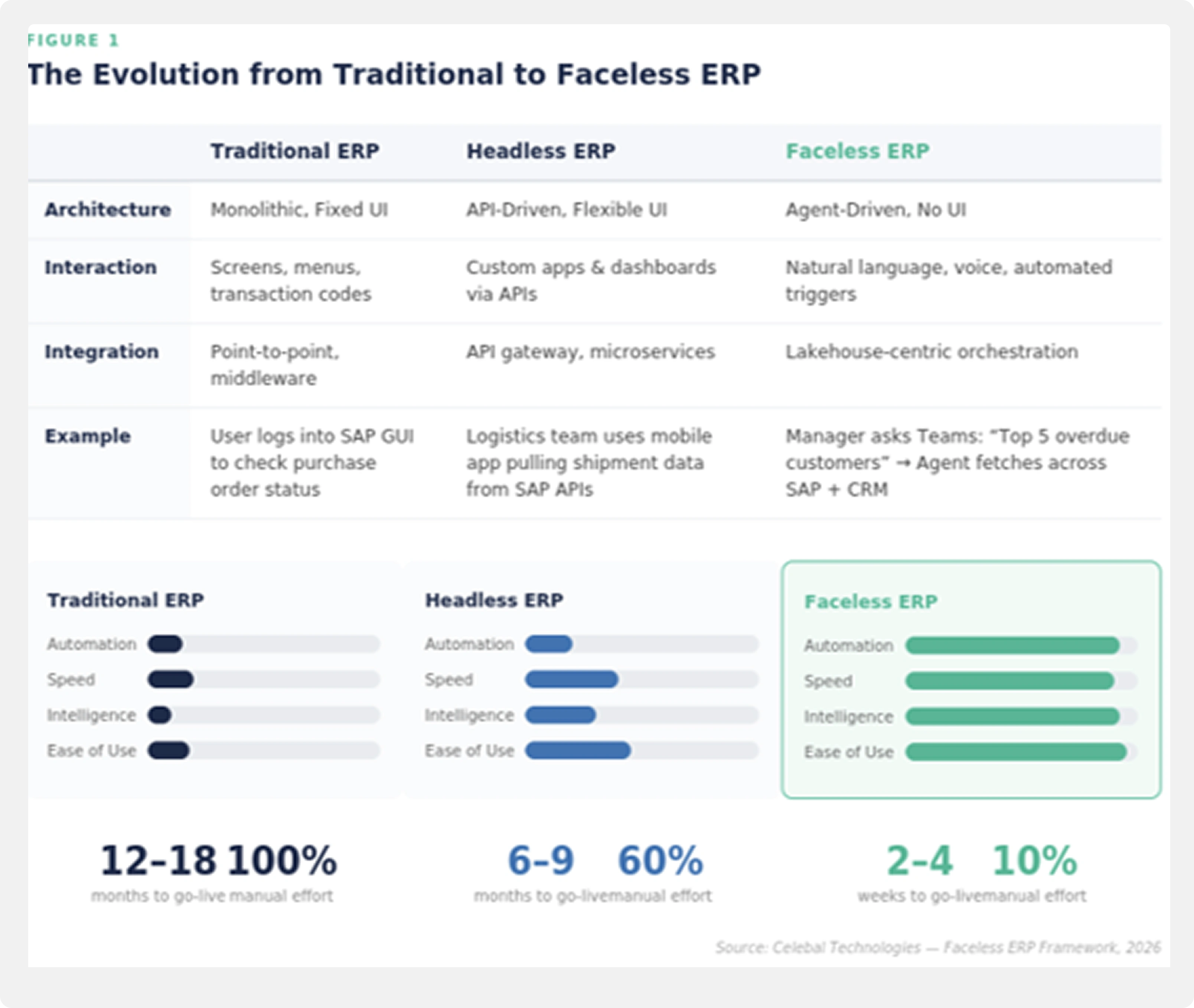
Figure 1: The Evolution from Traditional to Faceless ERP — Source: Celebal Technologies
Defining "Faceless ERP": The Three-Stage Evolution
Understanding the Faceless ERP requires tracing the evolution of how humans interact with enterprise systems. This evolution occurs in three distinct phases, as illustrated in Figure 1 above: from the monolithic, fixed-UI world of Traditional ERP, through the API-driven flexibility of Headless ERP, to the agent-driven, interface-free paradigm of Faceless ERP. Each phase represents a step-change in automation, speed, intelligence and ease of use—with Faceless ERP compressing go-live timelines from months to weeks and reducing manual effort from 100% to as little as 10%.
Core Tenets of Faceless ERP
Faceless ERP is the architectural principle that enterprise systems should be accessible and operable without requiring direct human interaction with their native user interfaces. The "face" of the ERP—its screens, menus, transaction codes and dashboards—is replaced by an intelligent orchestration layer.
Interface abstraction
Users never need to navigate ERP-specific screens. They interact through conversational interfaces, mobile notifications or fully automated triggers.
Vendor agnosticism
The orchestration layer sits above any combination of ERP platforms—Tier-1, Tier-2, regional, and legacy systems—treating each as a service endpoint.
Data-first design
All operational data is harmonised into a unified Lakehouse, creating a single source of truth that agents can query irrespective of the originating system.
Composable architecture
Enterprise capabilities are decomposed into modular agent skills that can be composed, versioned and governed independently.
Who Benefits and How
| Persona | Pain Point | Faceless ERP Impact |
|---|---|---|
| Frontline: Sales Reps, Shopfloor Operators | ERP is too complex; need simple, contextual answers fast | AI chat/voice interface removes complexity. Adoption with zero training. |
| Middle Management: Finance, Plant Leads, Procurement | Hours spent navigating ERP screens for reports and reconciliations | 70% reduction in manual report preparation. AI-driven anomaly detection for faster action. |
| Leadership: CXOs, Senior Managers | Struggle to get instant KPIs and insights on-the-go | AI delivers KPIs and insights via text/email, instant approvals anywhere. Ability to ask questions, reason over data, and perform causal analysis in natural language. 50% faster decision cycle. |
Table 2: Who Benefits and How
Defining Faceless ERP
Faceless ERP is not the absence of an ERP system. It is the reduction of the need for a human to directly operate the ERP system. ERPs persist as systems of record. The Lakehouse becomes the system of execution — where agents reason, orchestrate, and act.
Reference Architecture: The Lakehouse-Centric Approach
The Strategic Choice
When deploying enterprise agentic architecture, organisations face a fundamental decision:
Six-Layer Hybrid Architecture
The recommended architecture operates across three layers, each with a distinct purpose:
Table 3: Six-Layer Hybrid Architecture
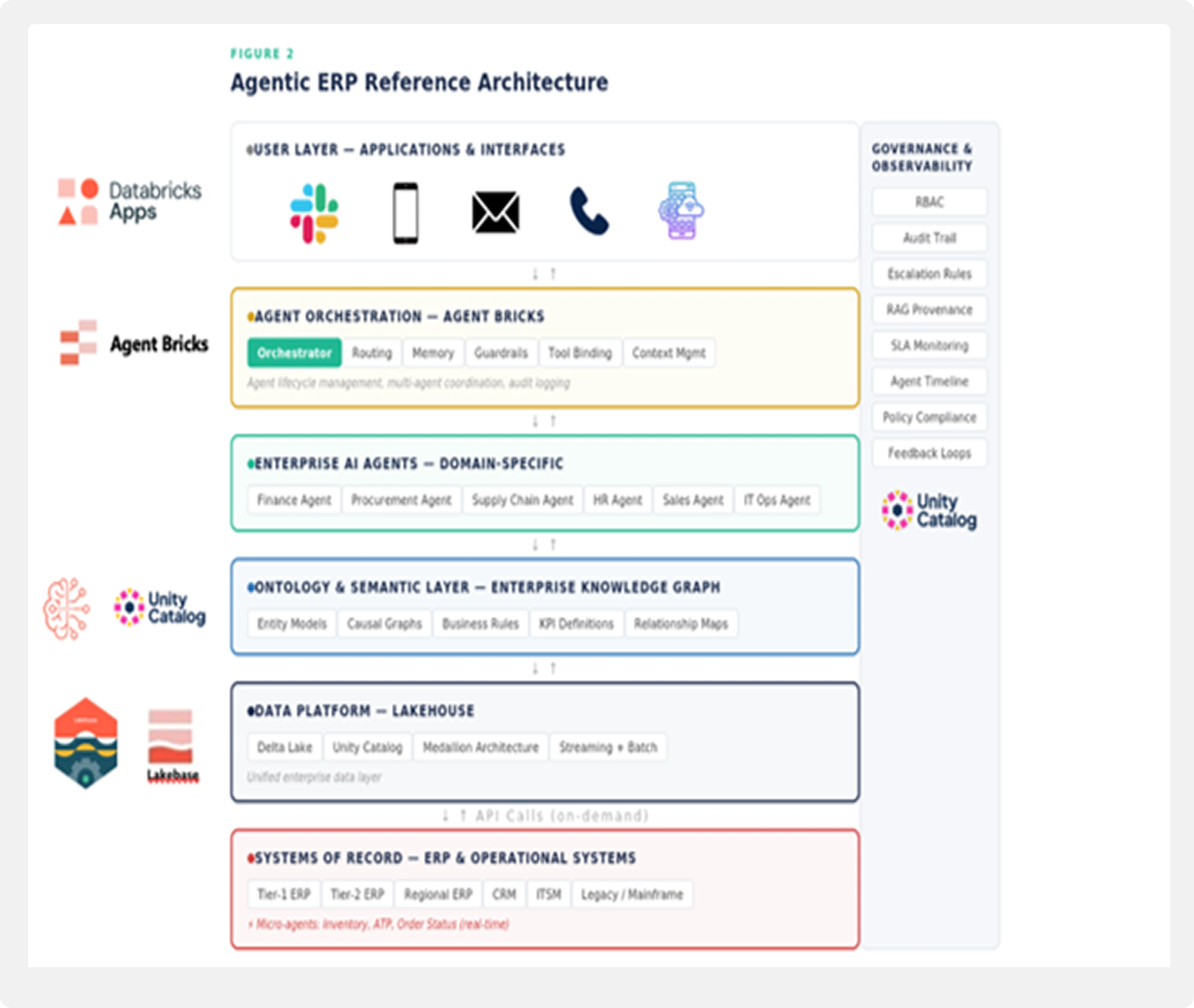
Figure 2: Faceless Agentic ERP Reference Architecture — Source: Celebal Technologies
The Latency Decision Framework
For every use case, the architecture asks one question: Does this use case require data fresher than what the Lakehouse can provide? If not, deploy a Lakehouse agent. If yes, deploy a lightweight micro-agent at the system of record, callable by the Lakehouse orchestrator.
Table 4: The Latency Decision Framework
The Latency Decision Framework applies not only to business data but also to agent state itself. Enterprise agents require persistent memory — skills, knowledge, interaction history, and learned patterns — that must be available at low latency across sessions and users. Lakebase provides a natural operational store for this agentic memory, combining structured queries, vector similarity search, and serverless scale-to-zero economics in a single engine governed by Unity Catalog. As agents accumulate more experience, this memory becomes an appreciating enterprise asset — agent identity lives in the persistent store, not in model weights, meaning LLMs can be upgraded or swapped without losing accumulated context.
Architecture Principle
Your Lakehouse already holds 80%+ of the data your agents need — and with near-real-time techniques such as CDC, streaming ingestion, and Lakebase, that coverage continues to grow. Moving agentic workloads to the data layer means you're not overloading transactional systems — and you're running agent compute on infrastructure purpose-built for analytical and AI workloads, not on ERP transaction engines.
Enterprise Ontology and Semantic Layer
A critical enabler of agentic reasoning is an enterprise ontology—a structured representation of business entities, relationships, metrics and rules...
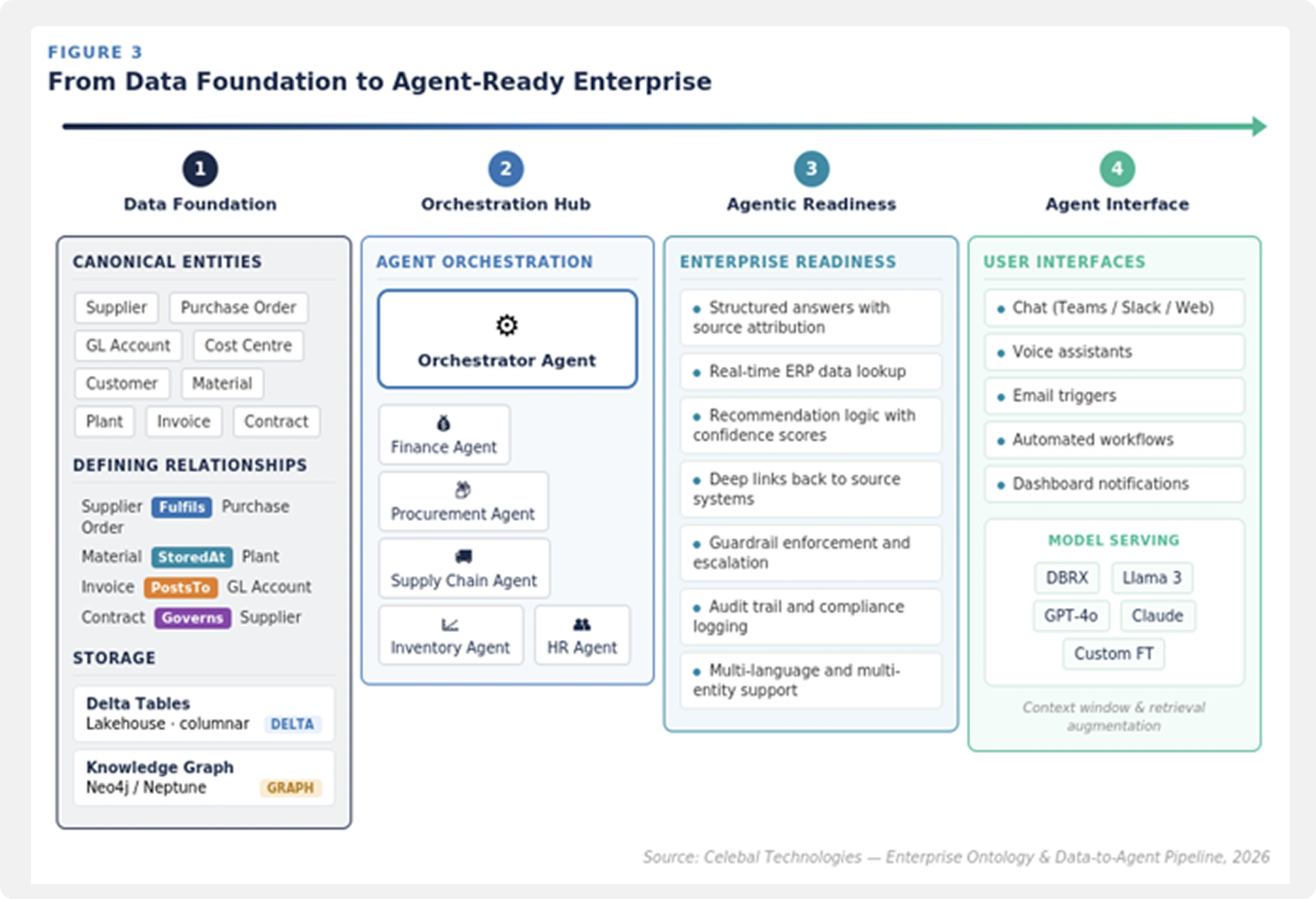
Figure 3: From Data Foundation to Agent-Ready Enterprise — Source: Celebal Technologies
Agent Orchestration Layer
The agent orchestration layer is powered by Databricks Agent Bricks...
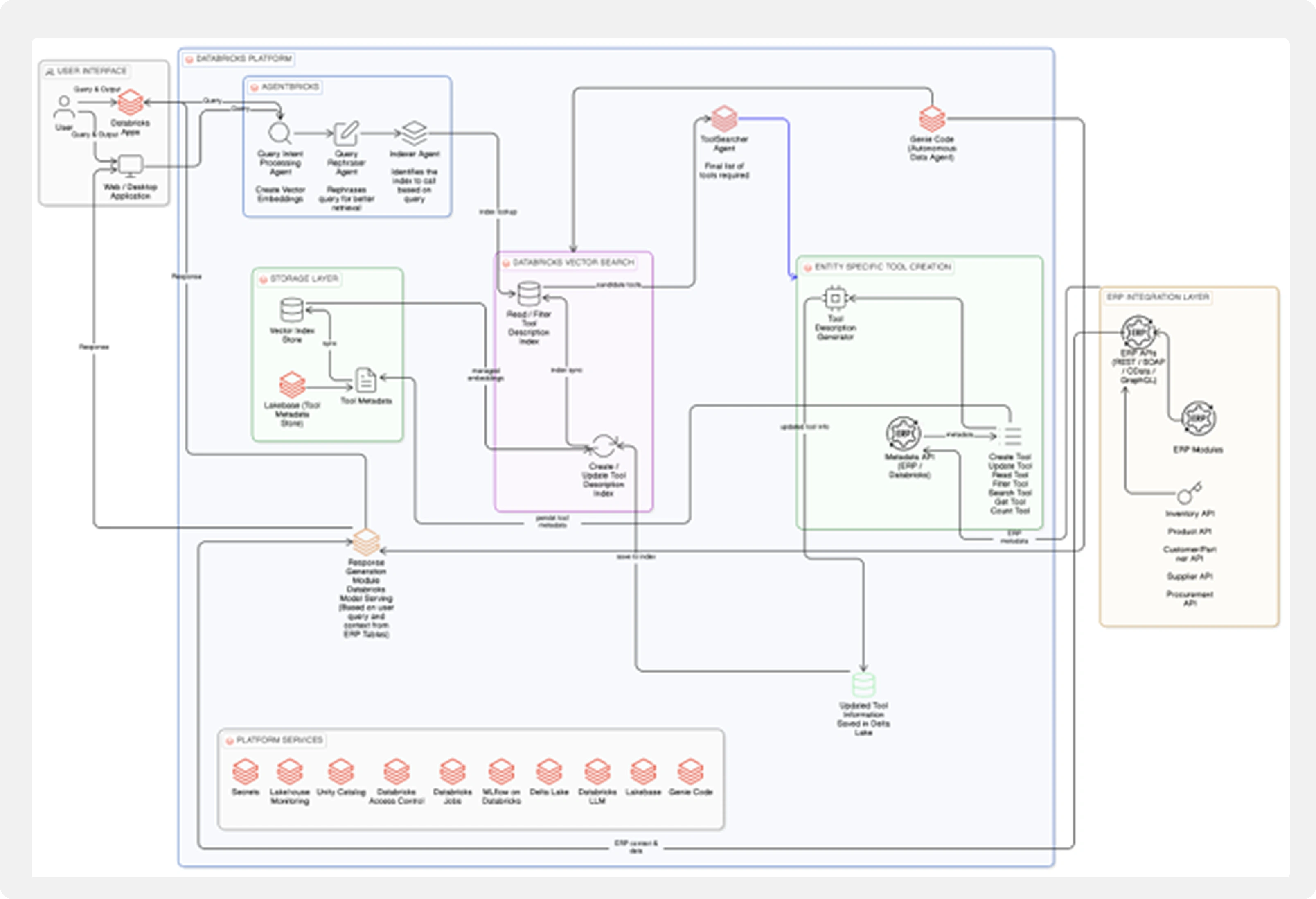
Figure 4: Faceless ERP Illustrative Architecture — Source: Celebal Technologies
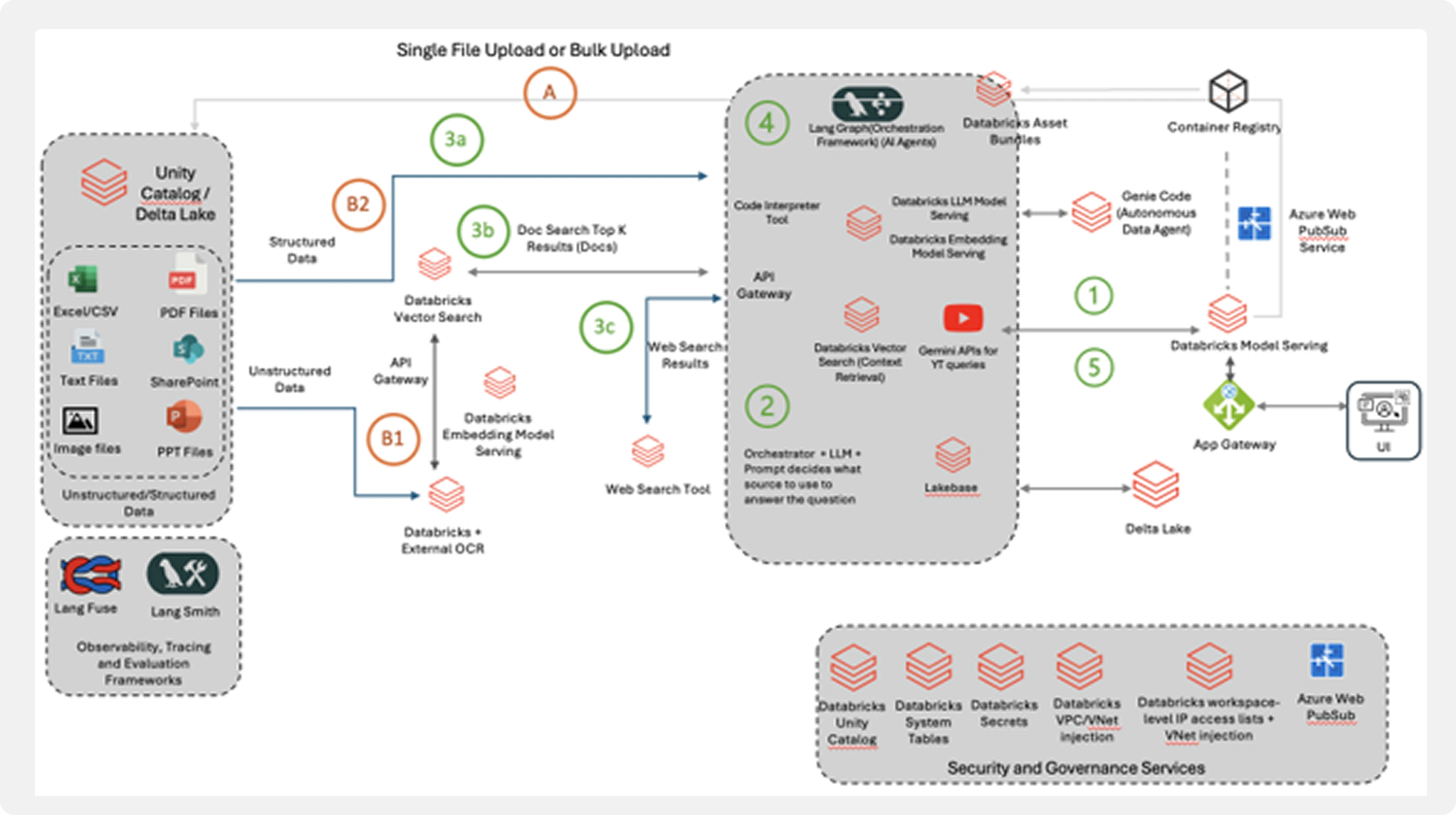
Figure 5: Declarative Orchestrator (Workflow Builder) Architecture — Source: Celebal Technologies
Enterprise AI Agents
The topmost layer comprises purpose-built agents aligned to enterprise functions, designed as modular, composable units:
Why the Lakehouse as the Foundation
The architecture described above is platform-dependent in one respect: it requires a data platform that can serve as both a unified data store, an agentic compute layer and a semantic layer.
- Horizontal scalability for agent workloads: Cloud-native architecture scales elastically with demand.Agent compute is decoupled from ERP infrastructure, eliminating capacity-planning constraints on transactional systems and works on Single Source of Truth.
- Integrated ML and AI toolchain: Agent Bricks, MLflow, Lakebase, Feature Store and Unity Catalog provide a continuous build-test-deploy-govern loop for agents — from development through evaluation, deployment, and continuous improvement — without requiring a separate ML platform or stitching together point solutions.
Faceless Agentic ERP in Practice: Customer Adoption*
The Faceless Agentic ERP framework delivers measurable impact across core enterprise functions. The following use cases illustrate how the architecture translates into operational value.
Finance Agent: Autonomous Reconciliation
The Finance Agent operates as a Lakehouse agent, processing bank statements, matching invoices and reconciling accounts across multiple currencies and geographies without human intervention.
- Multi-currency bank statement reconciliation across 28 bank accounts in 14 countries, automating PDF/Excel parsing and ERP posting.
- AR payment posting and invoice matching using a 3-tier matching engine for approximately 1,200 open invoices: exact match, fuzzy match with variance tolerance, and content-based email parsing.
- Impact: Reconciliation time reduced from 8 hours of manual effort to overnight automated processing.
Celebal Implemented Use-case – Global Data Analytics and Measurement Company
A global data analytics and measurement company deployed an Agentic Order-to-Cash solution on the Databricks Lakehouse to automate contract processing into SAP S/4 HANA. The system uses an Agentic RAG architecture with Databricks AI Agents and Vector Stores to parse complex unstructured contracts—both standalone and group agreements—extracting key entities and mapping them to approximately 40 SAP fields that previously required manual entry.
Procurement Agent: Intelligent Purchase Order Management
Purchase orders are created infrequently, and historical PO data, supplier performance metrics and contract terms already reside in the Lakehouse. The Procurement Agent cross-references suppliers, checks compliance and flags anomalies using enriched data from Lakehouse tables, calling the ERP only for rare real-time validation when creating or approving high-value POs.
Inventory Agent: Real-Time Stock Visibility
Inventory is the exception that proves the rule. Inventory data changes every few minutes—receipts, issues, transfers—and real-time stock availability is critical for Available-to-Promise and order promising. Latency tolerance is near-zero; batch processing simply does not work for this use case.
A lightweight micro-agent sits at the ERP layer, exposing a real-time inventory API. The Lakehouse orchestrator calls this agent on demand when inventory data is needed for broader workflows such as demand planning or order fulfilment.
Celebal Implemented Use-case – Large Multinational Conglomerate
For one of Asia's largest retail conglomerates, Celebal deployed an LLM-powered Inventory Insights engine that sits on the Databricks Lakehouse as an analytical complement to real-time stock visibility. The solution interprets natural-language queries about inventory KPIs—Sell-Through Rate, Days on Hand, and ageing stock—and traces root causes across business drivers.
Supply Chain Control Tower
For enterprises with complex supply chains spanning upstream sourcing, midstream distribution, regional hubs and downstream retail, the Faceless ERP acts as an intelligent control tower. Agents monitor demand signals, replenishment triggers, warehouse operations, logistics and exception reports—replacing static spreadsheet-based workflows with autonomous alerts and actionable insights.
Cross-Functional Impact
The highest-value scenarios emerge when agents collaborate across domains. A supply-chain disruption detected by one agent can trigger procurement re-sourcing, financial impact assessment and customer communication—all orchestrated without human intervention for standard response patterns.
Manufacturing Intelligence Agent: Shop-Floor Root Cause Analysis
In a global automotive and industrial supplier's Vietnam manufacturing facility, recurring production slowdowns stemmed from manual diagnostics, tribal knowledge locked in thick manuals, and disconnected data sources across operators, engineers, and team leads.
Celebal deployed a GenAI-powered Root Cause Analysis engine that allows users to ask plain-language questions about faults, benchmarks, and machine performance. The system searches across logs, manuals, and APIs in real time, returning pinpoint diagnostic insights.

Table 8: Customer Deployments at a Glance
Agent Governance and Deployment Framework
A lakehouse-centric Faceless ERP requires a configurable library of base agents aligned to enterprise needs, supported by a comprehensive governance framework:
| Capability | Description |
|---|---|
| Design and Compose | Visual tools for workflow creation; compose agents from modular building blocks |
| ERP Integration | Prebuilt connectors for all major ERP platforms (Tier-1, Tier-2, regional, and legacy systems) |
| Deploy and Scale | Quick deployment on any major cloud or multi-cloud. Elastic scaling. |
| Observability | Real-time metrics, agent timeline views, RAG provenance panes, and performance leaderboards |
| Industry Workflows | Built-in templates for retail, manufacturing, financial services, energy, and healthcare |
| Governance and Control | Role-based access, escalation triggers, policy compliance (95%+), audit trace completeness (92%+) |
Table 5: Agent Governance and Deployment Capabilities
Cradle-to-Cradle Observability
Every agent action is traced from prompt to outcome. The observability layer captures three dimensions: an agent timeline that traces each request through retrieval, inference, guardrail evaluation and API execution; an alerting system that flags SLA violations, tool-use anomalies and escalation triggers in real time; and a provenance trail that links every agent output to its source documents, enabling audit-ready traceability for regulated industries.
Security and Data Privacy
Moving enterprise data to a unified Lakehouse raises legitimate security and compliance questions. The architecture addresses these through multiple reinforcing layers: Unity Catalog enforces column-level access control and data lineage across all Lakehouse assets, ensuring agents can only access data their role permits. All data is encrypted at rest (AES-256) and in transit (TLS 1.2+).
For regulated industries and multi-national deployments, data residency controls ensure that agent workloads and the data they process remain within specified geographic boundaries. Sensitive fields—employee PII, financial account numbers, customer identifiers—are masked or tokenised before agents can access them, with audit logs capturing every agent query for compliance review.
Continuous Learning and Feedback Loops
A defining characteristic of agentic systems is their ability to improve through use. Every human override—a finance controller rejecting a reconciliation match, a procurement manager adjusting a suggested reorder point—is captured as a labelled training signal.
Outcome tracking closes the loop: when an agent's autonomous decision leads to a late payment or a stockout, that outcome is linked back to the decision parameters and the data context that produced it. Over time, these feedback loops allow agents to recalibrate confidence thresholds, refine retrieval strategies, and surface edge cases for human review before they escalate.
Critically, this learning operates within the governance framework described above—model updates are versioned in MLflow, validated against regression benchmarks, and promoted through the same shadow → supervised → autonomous deployment stages as new agents.
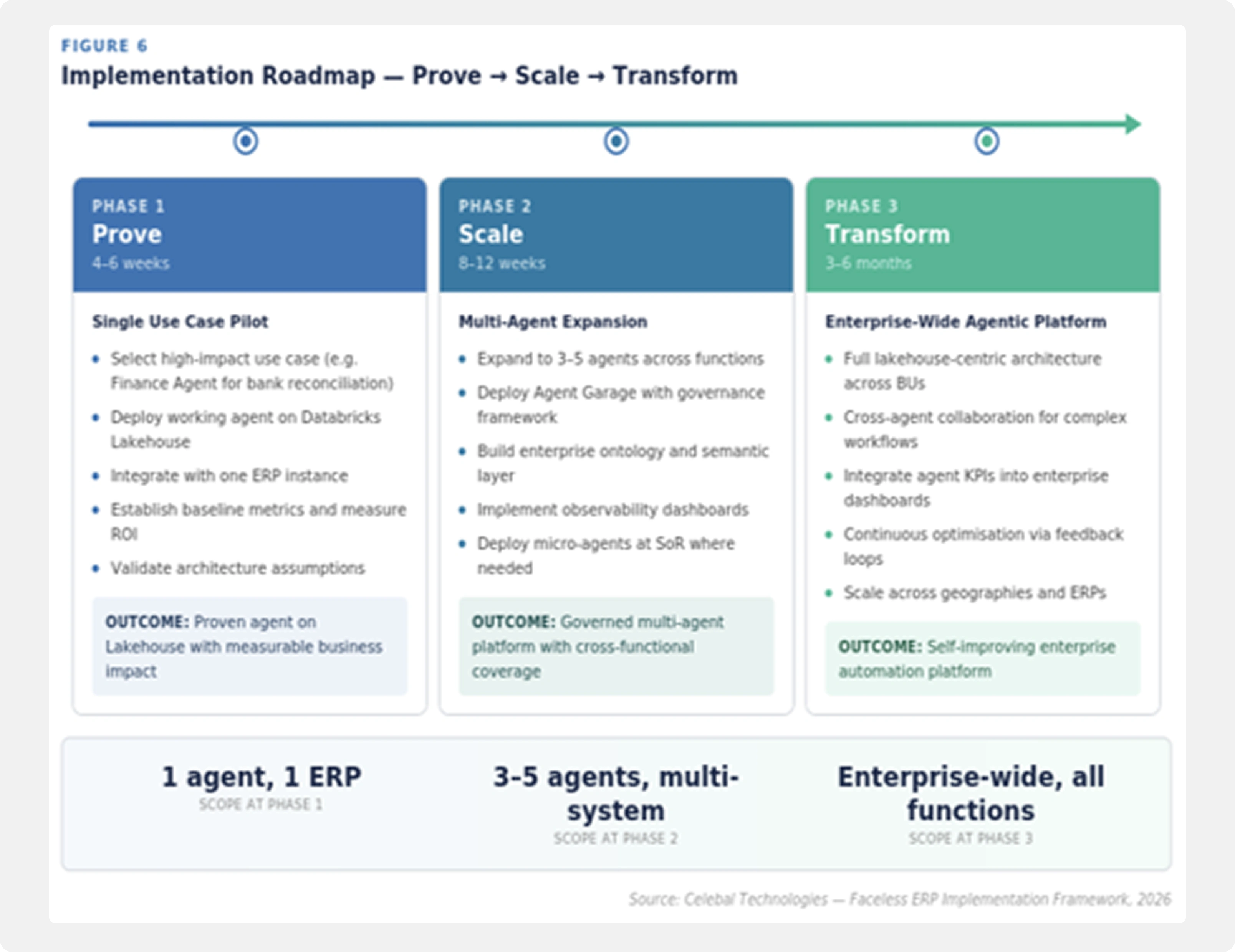
Getting Started: Implementation Roadmap
Deploying a Faceless ERP is not a big-bang transformation. It is an incremental journey that starts with one high-value use case and expands based on demonstrated ROI.
| Phase | Focus | Deliverables | Timeline |
|---|---|---|---|
| Phase 1: Prove | Single use case pilot | Working agent on the lakehouse, integrated with one ERP instance, measurable ROI | 4–6 weeks |
| Phase 2: Scale | Expand to 3–5 agents across multiple functions | Agent governance framework, prebuilt templates, observability dashboards, ontology layer | 8–12 weeks |
| Phase 3: Transform | Enterprise-wide agentic platform with orchestrator | Full lakehouse- centric architecture, micro-agents at SoR, cross- functional intelligence | 3–6 months |
Table 7: Implementation Roadmap
Strategic Business Impact
Accelerated Decision Velocity
Because agents sit on the Lakehouse rather than inside individual ERPs, they can correlate signals across systems that were previously invisible to each other—a supplier delay in the ERP triggering a margin impact assessment from financial data and a customer communication from CRM. This cross-system reasoning compresses decision cycles from days to minutes, particularly in volatile operating environments where the cost of delayed decisions is substantial.
Operational Automation at Scale
Faceless Agentic ERP extends automation beyond structured, rule-based RPA into the domain of judgement-intensive tasks. Agents handle exceptions, interpret ambiguous inputs and make contextual decisions— addressing the long tail of manual work that traditional automation cannot reach. Early adopters report the potential for significant FTE redeployment from transactional processing to strategic, value-added work.
Enterprise-Wide AI Adoption
The Databricks lakehouse-centric architecture creates a compounding on-ramp for AI adoption. Once enterprise data is harmonised and an ontology is in place, each new agent inherits the full data context and governance framework already established—no separate data integration, no new security review, no additional infrastructure. The fifth agent is dramatically cheaper and faster to deploy than the first.
Celebal Implemented Use-case – Fortune 500 Industrial Tools and Hardware Manufacturer
A Fortune 500 industrial tools and hardware manufacturer provides early validation of this compounding effect. The organisation deployed a centralised agentic AI platform—built by Celebal—that replaced multiple legacy tools with a unified, enterprise-wide intelligence layer. Adopted by over 1,600 users across departments, the platform achieved a 95 NPS score, a 6–10x productivity boost, and reduced document-to-insight time from days to minutes.
Decreasing marginal cost of deployment: each new agent inherits the existing platform, governance, and ontology — reducing the cost and time of successive agent rollouts to near-zero.
Reduction of ERP Complexity
Business users no longer need to understand ERP-specific navigation, transaction codes or data structures. Faceless ERP decouples the user experience from the underlying system complexity. This reduces training costs, lowers error rates and democratises access to enterprise data and processes across the organisation.
Why Now: The Convergence Window
Two years ago, the Faceless Agentic ERP was a conceptual possibility. Today it is an engineering reality. The difference is not any single breakthrough but the simultaneous maturation of capabilities that, for the first time, exist together at enterprise grade — and the Faceless Agentic ERP is the use case that brings them all together.
From answering questions to executing processes. Foundation models have crossed a threshold from text generation to reliable multi-step reasoning, tool use, and code execution. But reasoning alone isn't enough. Enterprises need agents that operate under real identity, real permissions, and real consequences. Agent Bricks provides exactly this — a governed platform where agents are built, deployed, and managed with the same rigour as any production system. Supervisor Agents coordinate multiple domain-specific agents into orchestrated workflows, routing a supply-chain disruption through procurement re-sourcing, financial impact assessment, and customer communication without human geography. Knowledge Assistants provide governed access to enterprise data with source attribution, ensuring that every answer an agent gives can be traced back to its origin.
Memory that compounds. The most valuable enterprise agents are not stateless. They remember what worked, what was overridden, and what failed. Lakebase — a serverless Postgres database native to the Lakehouse — provides the persistent memory layer where agent skills, enterprise knowledge, and interaction history are stored and governed. Episodic memories capture trajectories and human feedback; semantic memories distil these into generalised rules and patterns. The LLM becomes a swappable reasoning engine — upgrade or switch models at any time, and the new model immediately benefits from everything the agent has learned. Agent identity lives in the memory, not in the weights.
Real-time data without the complexity tax. The Faceless ERP thesis depends on data freshness. Lakeflow Connect streams CDC from ERP systems into Delta Lake, while Zerobus Ingest pushes event data directly into the Lakehouse at sub-5-second latency — no Kafka, no message bus, no multi-hop architecture. For workloads that demand transactional speed on the read path, Lakebase serves agent queries at sub-10ms latency. The combination means the Lakehouse can now handle the full latency spectrum — from nightly batch to near-real-time — on a single platform, shifting the 80/20 split between Lakehouse and ERP further toward the system of execution with every passing quarter.
Intelligence from any document, any system. Enterprise agents are only as good as the context they operate on. Genie translates natural-language business questions into governed SQL across the Lakehouse, giving every user — from the shopfloor operator to the CFO — self-service access to enterprise data without learning a query language or navigating an ERP screen. Vector Search enables semantic retrieval across millions of enterprise documents, while Document Intelligence extracts structured data from complex business artefacts — contracts, invoices, manuals — that previously required human interpretation. Together, they ensure agents can reason over the full breadth of enterprise knowledge, not just the structured data in a single system.
Governance that scales, not governance that blocks. The reason most enterprise AI pilots stall is not technical — it's governance. Unity Catalog resolves this by providing a single governance model across data, models, agents, tools, and MCP-connected external services. Column-level access control, data lineage, and audit trails are enforced once at the platform level. AI Gateway governs every model call — routing, rate limiting, and logging across providers. MLflow versions every agent, tracks every experiment, and evaluates every deployment against regression benchmarks. The result is that the tenth agent deployed on the platform inherits the full governance posture of the first — no additional security review, no new compliance framework, no separate infrastructure.
Each of these capabilities existed in partial or preview form as recently as 2024. None was production-ready at enterprise scale. Their convergence within a twelve-month window is what makes the Faceless Agentic ERP deployable today — and what makes it urgent. Organisations that wait for the next cycle risk falling behind competitors who are building these foundations now.
The Faceless Agentic ERP is not a novel application of one Databricks product. It is the thesis that ties the entire Data Intelligence Platform together — Agent Bricks for orchestration, Lakebase for memory and transactional workloads, Genie for self-service intelligence, Lakeflow Connect and Zerobus Ingest for real-time data, Vector Search and Document Intelligence for enterprise context, Unity Catalog and AI Gateway for governance, MLflow for continuous improvement, and Delta Lake as the foundation underneath it all. No other architecture brings all of these into a single, governed system of execution.
Conclusion: The Future of Enterprise Systems
The era of form-filling, menu-navigating, report-pulling ERP interaction is ending. Enterprise AI agents will fundamentally reshape how organisations interact with their systems of record. The winners will not be those who deploy the most agents, but those who deploy them on the right architecture.
The Faceless ERP, built on a lakehouse-centric architecture powered by a modern lakehouse platform, offers a path that is vendor-agnostic, cloud-agnostic and scalable. It does not require ripping out existing ERP investments. It sits on top of them, making decades of enterprise data accessible through natural language.
For enterprise leaders, the strategic imperative is clear: begin building the data and knowledge foundations now. The organisations that establish unified Lakehouse platforms and enterprise ontologies today will be best positioned to deploy agentic capabilities as the technology matures — capturing competitive advantage through faster decisions, lower operational costs and more adaptive business processes.
The Strategic Question for Every Enterprise Leader
The question is not whether to adopt agentic AI. It's whether to let every vendor build their own silo — or to build the orchestration layer that connects them all.
Strategic Technology Partnership
Faceless Agentic ERP extends automation beyond structured, rule-based RPA into the domain of judgement-intensive tasks. Agents handle exceptions, interpret ambiguous inputs and make contextual decisions — addressing the long tail of manual work that traditional automation cannot reach. Early adopters report the potential for significant FTE redeployment from transactional processing to strategic, value-added work.

About Celebal Technologies
Celebal Technologies is a data and AI consulting company that focuses on outcome-as-a-service with deep expertise across enterprise ERP, lakehouse, and cloud ecosystems. Celebal uniquely bridges the gap between traditional enterprise systems and modern cloud-native AI platforms.
With over 3,000 employees and deep platform certifications, Celebal operates across the Americas, EMEA and APAC, helping enterprises transform their data into intelligent, autonomous decision systems.
Reach out to us at facelesserp@celebaltech.com